

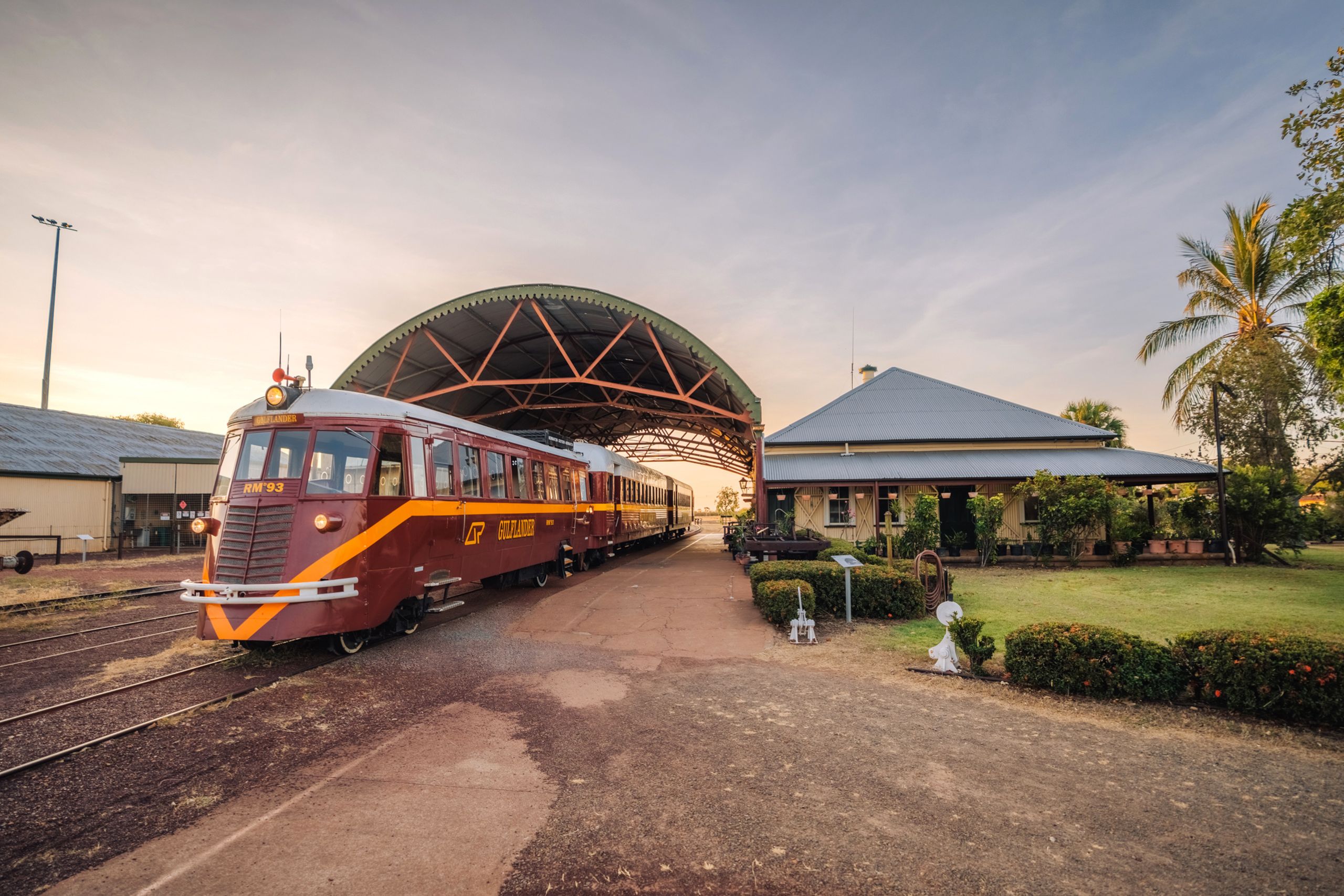
When you step onto the platform at Normanton Railway Station, you aren’t just preparing for an incredible journey, you’re stepping directly onto a piece of living history.Located in Queensland’s rugged Gulf Country, this pristine station looks like a vibrant vintage postcard brought to life. It is widely considered a bucket-list destination for rail tour operators, history buffs, and senior rail enthusiasts looking to experience the romance of Australia’s pioneering days through iconic rail holidays.
Beneath its charming maroon and yellow facade lies a fascinating tale of gold rush fever, architectural survival, and a brilliant engineering triumph over a harsh, isolated environment. Here is the remarkable story behind it.
The Town That Struck Gold (and Changed Rails)
In the late 1880s, the Queensland government set out to build a railway line from the bustling port town of Normanton heading south to Cloncurry. The goal was simple: support the region’s massive pastoral and cattle industries.
But outback life moves fast, and history had other plans.
In 1886, a massive gold discovery at Croydon, about 150 kilometre’s east of Normanton, sparked a classic Australian gold rush. Prospectors and miners rushed to the region, and the government quickly pivoted. They threw out the old blueprints and redirected the entire workforce to lay tracks toward the goldfield instead.
Construction kicked off in 1888, and by 1889, the spectacular Normanton Railway Station complex was officially opened.
Battling the Elements: The Genius of the Phillips Sleepers
Building a sustainable railway in the Gulf of Carpentaria is an absolute nightmare for traditional engineers. The region faces two relentless enemies: severe monsoon floods that wash away standard tracks every summer, and ravenous termites that eat traditional wooden rail sleepers for breakfast.
Enter George Phillips. He was a visionary engineer who patented a revolutionary solution right here on this line: hollow steel sleepers.
Unlike traditional lines that sit high on a bed of stone ballast, Phillips laid his steel sleepers directly into the outback soil.
The Flood Fix: When the massive wet season floods roll across the flat Gulf savannah, the water simply flows over the tracks without washing away the foundations.
The Termite Solution: The metal design completely bullet-proofed the line against hungry pests.
Remarkably, a huge portion of the original 1880s Phillips steel sleepers are still working perfectly beneath the train tracks today, making it a world-renowned destination for heritage rail travel.
Architecture Designed for Beating the Heat
The station itself is widely celebrated as a masterclass in vernacular tropical design. Because Gulf summers are famously brutal, the building features incredibly wide verandas, ultra-high ceilings, and deep eaves specifically designed to capture every hint of breeze while throwing maximum shade.
The absolute crown jewel of the site is the massive, curved corrugated iron carriage shed. This towering arched structure was built to shelter the trains from the blistering outback sun and heavy monsoonal downpours. Today, its silhouette stands as one of the most recognisable historic landmarks in the Gulf.
The Island Track That Saved Itself
By the time the full line between Normanton and Croydon was officially finished in 1891, the gold rush peak was already beginning to fade. Traffic quieted down, and because this 151-kilometer stretch of track was never actually connected to the rest of the Queensland rail network, it became an isolated “island track.”
Because it was cut off from the main grid, steam trains quickly became too expensive to operate. To save the line from total closure in the 1920s, the station introduced light, petrol-driven railmotors.
Affectionately nicknamed the “Tin Hare,” these small railmotors saved the line, kept isolated communities connected, and cemented the track’s status as a completely self-reliant outback survivor. In 1992, the entire station complex was proudly added to the Queensland Heritage Register.
Experience the Magic for Yourself!
Today, Normanton Station operates as an incredible open-air museum where you can walk through the vintage carriages, check out the historical archives, and feel the old-world romance of the pioneering days.
Best of all, it is the proud home of the legendary RM93 rail motor, the Gulflander.
This slow-paced, deeply nostalgic route has become incredibly popular among senior travellers who appreciate a highly comfortable, fully guided look at the heart of the outback. It’s the perfect addition to any itinerary focused on rewarding seniors group travel.
If you want to experience the magic of Normanton Station, ride the historic Gulflander across the savannah, and explore the breathtaking sights of Outback Queensland, we have the perfect itinerary for you.
As premier rail tour operators, we specialise in crafted senior tours and seniors hosted holidays that blend iconic rail experiences with seamless comfort. Our spectacular Awesome Foursome Gulflander & Savannahlander Adventure is one of our most popular seniors escorted holidays, a fully hosted journey that packs four of Queensland’s most iconic rail experiences into one unforgettable trip.
From the overnight luxury of the Spirit of Queensland to the nostalgic charm of the Gulflander and Savannahlander, plus cruises through the towering sandstone walls of Cobbold Gorge, this is the ultimate outback expedition.
Spaces fill up quickly for these legendary departures, making early booking essential for senior rail enthusiasts.